Pudding Paperbacks
Forthcoming in 2026
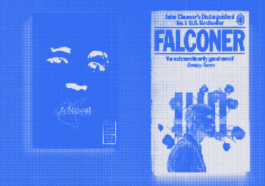
Pudding Paperbacks publishes exploratory fiction in inexpensive, portable, tactually compelling editions that encourage readers to imagine new forms of life.
It is through reading that we formulate new models for how to live. Novels in particular, in virtue of how they invite a private form of experimentation, encourage us to open ourselves to forms of life different to those to which we’re exposed at home, in school, and in our communities. Fiction fosters curiosity, tolerance, and openness to difference.
But there is a tension here. For the novel is a product of a historical process exemplified by the refiguring of reading, sleeping, eating—not to say earning a living, raising kids, coping with uncertainty—as things commonly done in isolation. Novels are written with the understanding that they will be read in solitude as opposed to sung communally or recited publicly. Too often today, fiction serves to reinforce in us the conceit that our lives unfold in isolation, that at best we can rely on a handful of intimates, that there is no thing we hold in common.
Pudding Paperbacks springs from the premise that fiction, presented in book form, represents a medium for the cultivation of ethical imagination. Books have edges. A book is a slice, a snapshot. Reading books, we learn to make peace with our limits, with the impossibility of knowing everything. Books teach us to distrust the feeling of certainty, to reject closure, to remain open to the possibility that things could be otherwise. A book can only ever be one gesture in an ongoing conversation.
Above all, a book is a tactile thing. Our lives begin with touch; so should reading.